Getting Your Product Into ChatGPT Is Easy. Getting Customers to Checkout Is Harder.
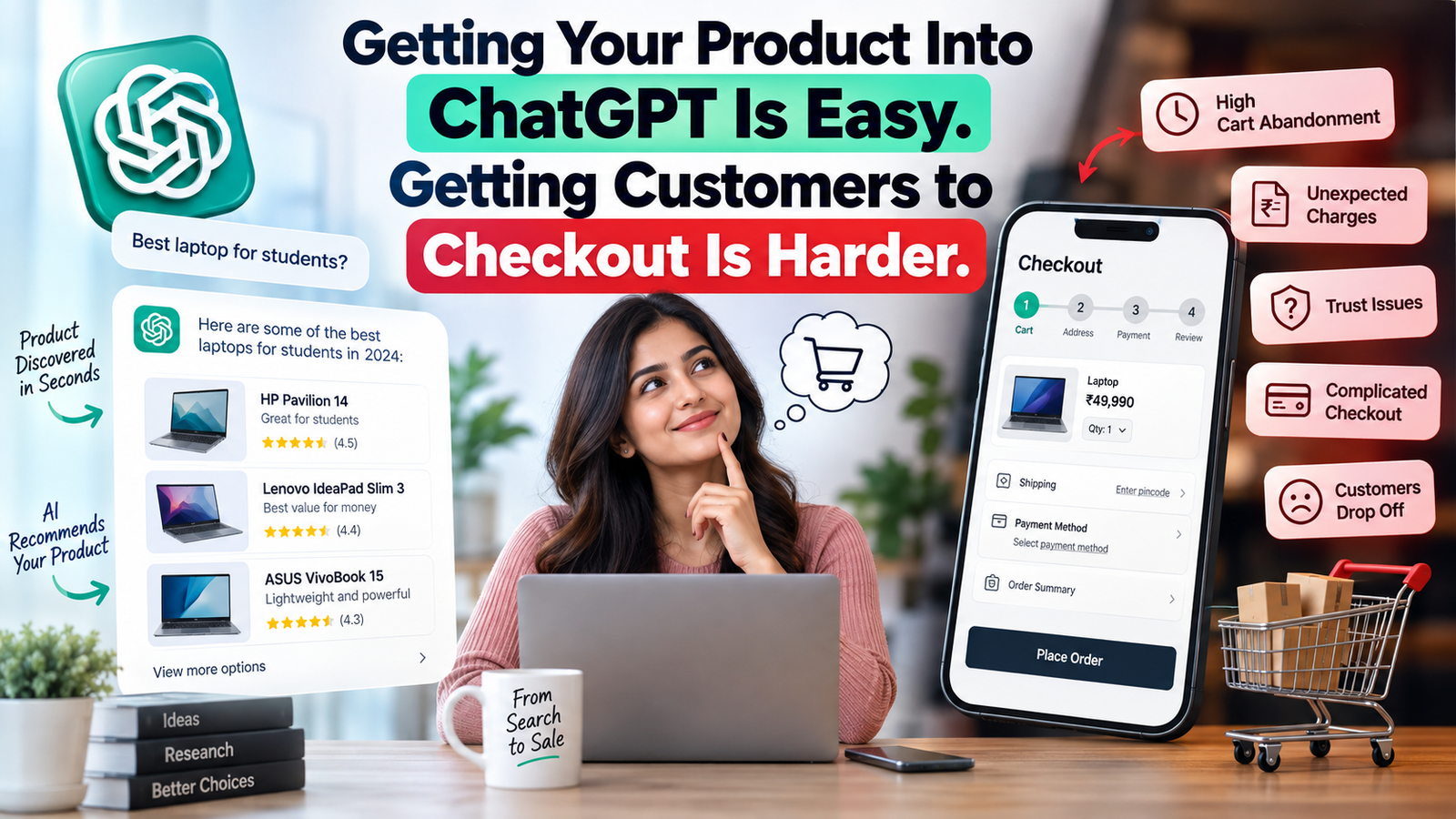
In today's digital shopping world, customers aren't just searching for products on Google, but also discovering them through AI tools like ChatGPT. This change has created a new opportunity for e-commerce brands, but getting products visible in AI shopping results is just the first step. The real challenge begins when a customer decides to purchase after viewing a product. AI shopping, e-commerce conversion optimization, product visibility, and the checkout experience are now closely connected. The key question for Hash Digitech is not just how to make a brand visible in AI, but how to convert that visibility into actual sales and revenue.
Getting Discovered Is Only the Beginning
Imagine a customer searches on ChatGPT for “Best sofa cover for a 5-seater sofa” or “Affordable skincare products for daily use.” The AI suggests relevant products, and your product may even appear on the list. But does this mean the customer will automatically buy your product? Absolutely not. Product discovery is the starting point of the customer journey, not the final destination. The customer needs to understand product details, compare prices, view reviews, check delivery and return policies, and then complete checkout. Therefore, it's important to consider ChatGPT product discovery and e-commerce sales conversion as part of the same strategy.
What Does It Mean to Get Your Product Into ChatGPT?
Product discovery in ChatGPT means that when a customer asks the AI about a product, category, or shopping requirement, your product appears with relevant information. For this, product titles, descriptions, images, pricing, availability, and other product details must be accurate and consistent. But simply making product listings AI-friendly isn't enough. The real value of efforts like AI search optimization, ChatGPT shopping visibility, and product feed optimization occurs when customers receive clear information about the product and are motivated to take the next step. Therefore, brands should view AI discovery as a complete e-commerce strategy, not just as a new traffic source.
The gap between interest and buying intent
A customer's discovery of a product and their completion of a purchase are two distinct stages. An AI recommendation can lead a customer to the product, but the purchase decision depends on the product page and checkout experience. If the customer is unclear about the product's benefits, the price is confusing, delivery information is missing, or trust in the website isn't built, they may postpone the purchase. In the e-commerce conversion funnel, every stage from discovery to consideration and from consideration to conversion is important. Therefore, conversion rate optimization (CRO) isn't just about increasing website traffic, but about converting that traffic into customers.
Why Checkout Is the Hardest Part of the AI Shopping Journey
Checkout is the stage where a customer's buying intent is converted into an actual transaction. Even the slightest friction at this stage can prevent a purchase. If the website is slow, payment options are limited, shipping charges are displayed at the last moment, or the customer doesn't understand the return policy, they may abandon their cart. A customer who discovers a product through AI ultimately experiences a real shopping experience. Therefore, checkout optimization, cart abandonment reduction, and a seamless checkout experience are crucial for e-commerce brands. Displaying the product to AI is important, but leading the customer to confidently complete payment is even more important.
Product Visibility vs. Conversion: Two Different Goals
The goal of product visibility is for customers to discover your product, while the goal of conversion is for them to purchase it. Both goals are connected, but require different optimizations. Accurate product information and relevant content are crucial for improving AI product visibility, while product page quality, pricing, trust signals, and checkout experience are important for e-commerce conversion optimization. If your product appears frequently in AI but customers aren't purchasing, the problem may not be visibility, but the conversion journey. Therefore, brands should measure actual sales and revenue, not just impressions and clicks.
What E-commerce Brands Need to Optimize Beyond ChatGPT
When preparing for AI shopping, brands should optimize their entire e-commerce ecosystem. Product titles and descriptions should be clear, images should be high-quality, pricing and availability should be updated, and product pages should be mobile-friendly. Additionally, shipping charges, delivery timelines, return policies, and payment options should be easily understood by customers. E-commerce SEO, product listing optimization, AI-ready product content, and mobile checkout optimization work together. When product information is consistent and the buying experience is smooth, a customer arriving via AI can move more confidently towards purchase.
The Role of E-commerce Platforms in AI Shopping
E-commerce platforms and marketplaces play a crucial role in the product discovery and purchase journey. Whether you're selling on Amazon, Flipkart, Meesho, or your own independent website, it's crucial that product information is accurate and consistent. If the price is one thing on one platform and another, or product availability isn't updated, it can lead to customer confusion. E-commerce marketplace optimization, product data consistency, and an omnichannel e-commerce strategy help brands deliver a better customer experience across multiple shopping channels. With the growth of AI shopping, brands should prepare their product information not only for traditional search engines, but also for emerging AI-driven shopping experiences.
From AI Recommendation to Revenue: Measuring What Matters
The success of an AI shopping strategy shouldn't be measured solely by how many times a product appears in AI results. Brands should also monitor how many customers clicked on the product, how many engaged on the product page, how many added to cart, and how many completed checkout. AI shopping analytics, e-commerce conversion tracking, and customer journey analytics help brands understand whether their strategy is delivering real business results. If AI is driving traffic but conversions are low, it may be necessary to improve the product page and checkout experience. Ultimately, metrics like revenue growth, conversion rate, and customer acquisition cost better reflect business performance.
A Practical Strategy for Brands Preparing for AI Shopping
To prepare for AI-driven shopping, brands should follow a structured approach. First, audit your product information and ensure that titles, descriptions, images, pricing, and availability are accurate. Next, improve product pages so customers can find clear benefits, reviews, shipping details, and return policies. Next, make the checkout process simple and mobile-friendly so customers can complete purchases without unnecessary steps. Additionally, implement AI search optimization, e-commerce SEO strategy, and conversion rate optimization as an integrated plan. By regularly analyzing data and understanding customer behavior, brands can continuously improve their shopping journey.
The brands that connect AI visibility with checkout optimization will be better positioned to compete
AI shopping is creating a powerful product discovery opportunity for e-commerce brands, but simply being visible in AI doesn't guarantee sales. Customers need a smooth and trustworthy experience from discovering a product to completing a purchase. Therefore, it's crucial to focus on ChatGPT shopping optimization, e-commerce conversion optimization, and checkout experience improvement simultaneously. Brands that connect AI visibility with strong product pages, transparent pricing, and frictionless checkout will be better prepared to compete in the changing e-commerce landscape. Hash Digitech supports businesses in improving their online presence and customer journey through e-commerce SEO, AI-ready product content, marketplace optimization, and digital marketing strategies. Ultimately, the goal should not only be for customers to discover your product, but also to confidently purchase it.